Leadership Skills
Discover the key qualities of a successful leader and how to develop them in yourself. Explore effective communication, decision-making, and team-building skills essential for leadership roles.





Implementation Science is the scientific study of methods and strategies that facilitate the uptake of evidence-based practice and research into regular use by health care practitioners and policymakers. This workshop offers an engaging introduction to this dynamic field by providing a broad overview of theories, frameworks, and methodologies used to bridge the gap between research and practice. Throughout this workshop, we examine how frameworks can inform the planning, execution, and evaluation of implementation strategies across various disciplines, including healthcare, education, public policy, and social services.
Learning objectives
Define implementation and implementation science and distinguish implementation science from related fields
Provide an overview of theories, frameworks, and methodologies used in implementation science
Recognize and define core concepts and key features of implementation science

The know-do gap is defined as a gap between the recommendations of research evidence and what is done in practice. This workshop covers methods to identify and understand the existence of “know-do” gaps in implementation research and assess these gaps using quality indicators which can be used to develop strategies to measure the gaps. Participants will learn how to identify the “know-do” gap by organizing a diverse implementation team to examine gaps in practice and then determining a suitable set of stakeholders to represent the population of interest. This workshop will also describe a three-step approach to assess gaps, including the brainstorming phase to determine priority practice gap areas, identify available research evidence on best practice recommendations, and finally use quality indicators and the Delphi technique to measure the gap between current and ideal practice.
Learning objectives
Conduct a holistic “know-do” gap assessment using a wide range of resources including stakeholder views, clinical practices, direct observations, and competency assessments
Apply the three-step approach to assess gaps: brainstorming, identifying practices used to determine gaps, and evaluating quality indicators
Determine effective quality indicators and perform the Delphi technique to formulate the quality indicator.

This workshop focuses on the challenges and strategies of implementation science within the context of global health. Through a combination of theoretical frameworks and case studies, participants will explore the role of contextual factors, including varying political climates and cultural norms, and identify strategies to overcome barriers to the delivery and impact of interventions. This workshop will cover a range of implementation strategies, including capacity building, stakeholder engagement, and the adaptation of interventions to local contexts. Participants will also learn about factors such as community participation, health system strengthening, and sustainable financing mechanisms for the global expansion of EBIs.
Learning objectives
Contribute to the effective implementation of evidence-based interventions in global health
Develop a deeper understanding of the unique challenges and opportunities in low-resource settings
Apply implementation science tools to address health outcomes across a diverse global context
EBI is an intervention that is evidence-based and has been tested more than one time in reputable research work and has been proven to improve health outcomes effectively. There are typically three main ways that EBIs can be publicized. The first is through recommendations from systematic reviews, the second is from intervention packages, and the third main format is through examining multiple intervention studies. This workshop explores each format, as well as provide some pros and cons to consider. The Knowledge to Action Framework will be explored on how it can guide the process of evidence synthesis. This workshop will also provide participants on other methods of assessing EBI effectiveness including simulation modelling and cost-effectiveness analysis.
Learning objectives
Know how to evaluate evidence and apply the outcomes of the knowledge synthesis and tools to your practice
Understand and apply levels of evidence
Understand the processes by which evidence/knowledge is synthesized

EBIs are adapted to overcome the issue of inflexibility and, account for real world conditions, including the barriers faced by vulnerable communities and addressing any spontaneous challenges that arise during the implementation process. Adaptation can also help us set interventions for new target populations, diverse cultural groups, and promote international expansion of EBIs. This workshop will cover the importance of adapting EBIs in light of two important framworks using the IDEA (Iterative Decision-Making for Evaluation) framework to help adapt EBIs and track these adaptations using FRAME (Framework for Reporting Adaptations and Modifications Expanded).
Learning objectives
Identify reasons for adapting EBIs and various types of adaptations
Track EBIs using FRAME
Examine and apply a conceptual and systematic framework, IDEA, to adapt and ensure fidelity and effectiveness of EBIs
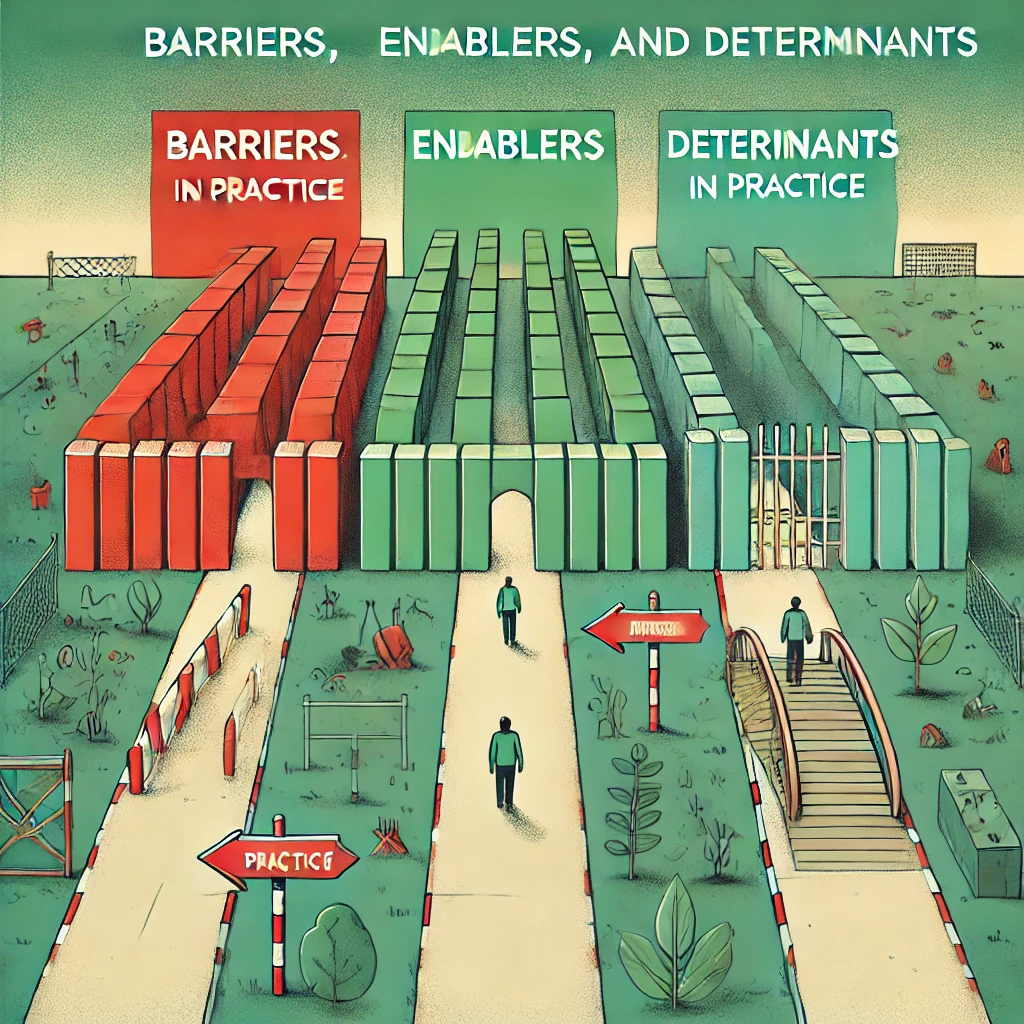
This workshop focuses on how contextual factors (barriers and facilitators) or implementation determinants contribute to the feasibility of the EBI. The workshop provides an overview of four core processes help identify these contextual factors, including creating your own Knights of the Round Table, using theories and frameworks, collecting new contextual data and effectively improving implementation by prioritizing the most impactful barriers or facilitators by assessing their importance and changeability.
Learning objectives
Explain how various contextual factors, referred to as barriers and facilitators, can influence implementation success.
Describe a process for using existing implementation science knowledge, frameworks, and contextual data to identify barriers and facilitators to implementation.
Prioritize the most impactful barriers and facilitators to result in the intervention having a more significant impact

This workshop is designed to provide participants with in-depth knowledge of theories, models, and frameworks. and how they can be practically leveraged to facilitate the uptake of evidence-based practice and research into regular use by healthcare practitioners and policymakers. workshop will focus on five theoretical approaches: process models such as CFIR, classic theories such as Rogers’ Theory of Diffusion, implementation theories such as COM-B, and evaluation frameworks such as RE-AIM.
Learning objectives
Evaluate the key frameworks and strategies commonly used in Implementation Science, including their strengths and limitations
Apply theories and dissemination strategies to change a target audience’s knowledge, attitudes, intentions, and behaviors related to an evidence-based intervention (EBI)
Recognize how constructs from theories, models, and frameworks can help inform the identification of barriers and facilitators to implementation.
The RE-AIM is a framework to guide the planning and evaluation of programs according to the five key RE-AIM outcomes: Reach, Effectiveness, Adoption, Implementation, and Maintenance. It is one of the most frequently applied implementation frameworks. This workshop describes the application and evolution of RE-AIM and focuses on issues, dimensions, and steps in the design, dissemination, and implementation process that can either facilitate or impede success in achieving broad and equitable population-based impact. The workshop will enable participants to effectively use RE-AIM in planning, implementing, evaluating, and sustaining EBIs to be implemented into practice using specific cases.
Learning objectives
Identify performance indicators using RE-AIM
Critically evaluate how EBIs are implemented using the RE-AIM framework
Apply the RE-AIM Framework to Intervention Planning and Evaluation.
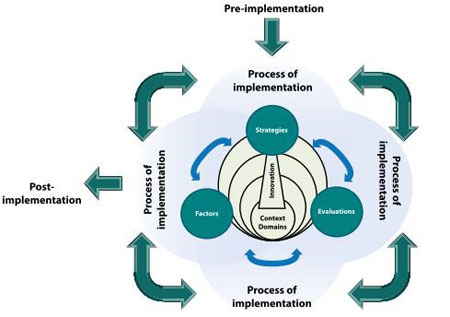
This workshop covers the Implementation Outcomes Framework and the importance of internal and external validity in determining causality and generalizability. The workshop explains applications of evaluative study designs, focusing on how audit and feedback strategies can be improved using Continuous Quality Improvement and when to use randomized or non-randomized designs, such as the interrupted time series to compare effectiveness of standard and new healthcare practices. The workshop also focuses on developing implementation science evaluation questions that are appropriate for different stages of implementation and varying contexts and how to monitor implementation to identify areas where adaptation is needed.
Learning objectives
Select and apply an appropriate framework to develop implementation science evaluation questions that are appropriate for distinct stages of implementation and varying contexts
Select appropriate implementation, process, and health impact outcomes to address an evaluation question of interest
Identify trade-offs and strengths that must be considered in the design of an implementation research evaluation to balance validity and feasibility

This workshop will focus on organizational theories and models to improve vaccine implementation and evaluation. In the workshop, participants will be provided with an overview of theories and determinant frameworks used in implementation research around vaccines. The workshop will specifically cover how to apply the two specific determinant frameworks, the Consolidated Framework for Implementation Research (CFIR), and the Theoretical Domains Framework (TDF). It will also focus on the organizational readiness for change theory to identify the barriers and facilitators to vaccination program implementation. The workshop’s focus on determinant frameworks (CFIR and TDF) and the theory of organization readiness for change seeks to provide participants with practical tools, evidence-based strategies, and a deeper understanding of implementation science principles to drive tangible improvements in vaccine implementation and evaluation.
Learning objectives
Demonstrate proficiency in using CFIR, TDF, and the organizational readiness for change theory, to improve the evaluation and planning of vaccine programs.
Identify factors, barriers, and facilitators to vaccine implementation within participants’ specific organizational or community contexts, using the CFIR, TDF, and the theory of organizational readiness for change.
Design tailored strategies and interventions based on CFIR and TDF research findings to address identified barriers and leverage facilitators
The workshop examines how to effectively navigate barriers and challenges that arise during the implementation process and develop strategies to promote sustainability and long-term success. This workshop covers the idea that implementation strategies are categorized using nine conceptual areas, which describe that effective strategies are evaluative and iterative, provide interactive assistance, adapt, and tailor to context, develop stakeholder interrelationships, train, and educate stakeholders, support clinicians, engage consumers, utilize financial approaches, and alter infrastructure. Participants will also be introduced to the Expert Recommendations for Implementing Change (ERIC) project and implementation strategies used in polio vaccination studies.
Learning objectives
Use implementation research principles to choose strategies to use for implementation, reflecting implementation determinants and targeted outcomes
Identify and understand conceptual areas for categorizing implementation strategies
Derive effective implementation strategies using the ERIC project
The workshop will focus on The Implementation Research Logic Model (IRLM) by Smith and others which connects implementation determinants to implementation strategies. Participants will recognize that after conducting an assessment with this model, the establishment of a proactive project team is vital to implementing and scaling up EBIs. This workshop also reveals that to form an ideal project team, it is crucial to establish responsibilities within the team and determine if team members have time and resources to contribute to the implementation process. Another crucial step that occurs after building the team is the Monitoring, Evaluation and Learning plan (MEL) to identify implementation progress and help strong build team dynamics.
Learning objectives
Create a strategy to measure the practice gaps, develop an implementation team and plans to get ready to start implementation
Develop an implementation team and an effective plan to begin implementation
Monitor implementation using MEL to identify areas where adaptation is needed
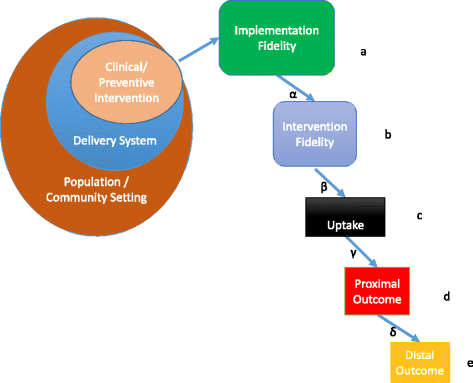
This workshop explores the importance and process of scaling up EBIs, the six phases to scale up and the possible trade-offs. Scaling up involves designing and conducting an initial test of the intervention, expanding, and institutionalizing through a systems thinking approach, testing EBIs in various settings, and ensuring sustainable and equitable practices for widespread accessibility. This workshop also dissects ExpandNet’s systems framework that helps derive a sustainable and impactful scaling up strategy. Participants will also learn about four different types of scaling up and understand that scaling up procedures require substantial participation from stakeholders and reproducibility in simplified models.
Learning objectives
Understand concepts common to major scaling-up frameworks and approaches and their importance in implementation science
Be able to discuss key principles, lessons, and practices for sustainable scale up such as ExpandNet’s framework, as well as common challenges encountered
Explain why sustainability is important from the perspective of key stakeholders
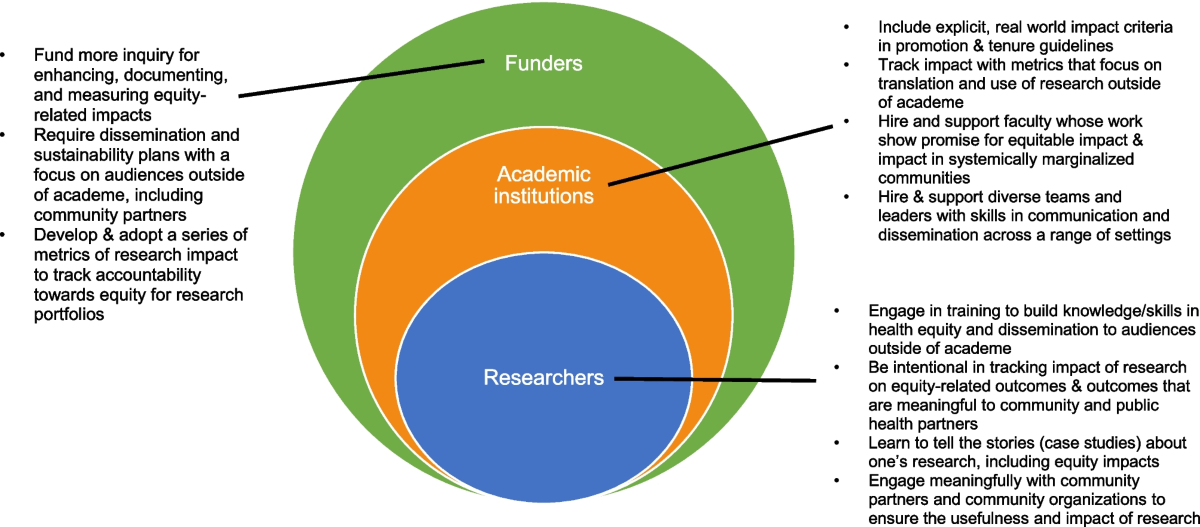
This workshop examines the critical intersection between implementation science and equity, delving into the challenges and opportunities for promoting equitable implementation of evidence-based interventions. This workshop also critically examines systematic factors that contribute to inequities in implementation, such as structural racism, socioeconomic disparities, and unequal access to resources. We explore how cultural competence, humility, and community engagement promote inclusivity. We explore data collection and analysis methods that capture and address equity considerations and frameworks, such as community-based participatory research (CBPR) that influence the success of interventions in diverse settings.
Learning objectives
Conduct equity impact assessments and identify the reasons for different impacts of implementation science among diverse populations and communities
Develop strategies such as community-based participatory research (CBPR) methods to reduce disparities
Disaggregate data by relevant sociodemographic factors and gain a distinct understanding of the complexities of achieving equitable implementation